

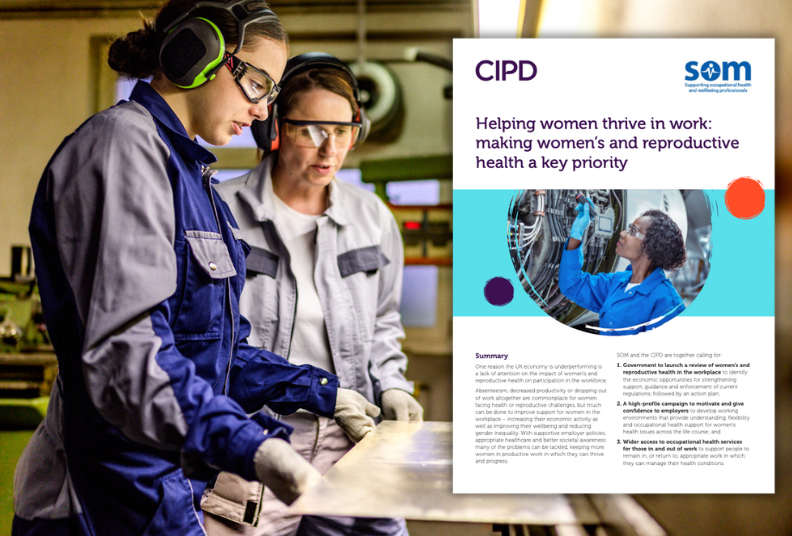
In workplaces across the UK, the conversation around women’s health is shifting – from silence to support, from stigma to strategy. A recent CIPD and Henpicked event, “Helping Women Thrive at Work,” brought together key voices to highlight the urgency, progress and practical actions needed to close the UK’s stark female health gap and create truly inclusive workplaces.
The cost of silence
It was Rachel Suff, Senior Policy Adviser at the CIPD, who set the tone with a hard-hitting statistic: “The UK has the largest female health gap in the G20 and the 12th largest globally. I was really surprised and disappointed to see that we are so low down in that league table. I expected us to be much higher.”
This gap has consequences far beyond health. “There’s a real hard cost,” Rachel added, “not just to individuals but to organisations and the wider economy. Lost productivity due to lack of workplace support for women’s health costs the UK an estimated £11 billion annually.”
And the personal impact is no less stark. As one survey respondent shared, “I’ve been unable to continue a career which I developed over 25+ years due to being unsupported with symptoms of brain fog, extreme fatigue, mood swings and stress. This led me to having to take part-time, low-paid work.”
Where we’ve made progress and where we haven’t
Claire McCartney, Senior Policy Adviser at the CIPD, acknowledged significant progress in one area in particular: “When we started this work in 2018 with Deborah and Henpicked, fewer than one in ten organisations had support in place for menopause. Today, it’s almost half. That’s real progress.”
Rachel agreed: “Within five or six years, I’ve never seen change happen at such a rate. That’s because passionate organisations, campaigners and workplace champions have come together. It’s been a real grassroots movement.”
But there’s still a long way to go. Only 37% of organisations offer support for pregnancy loss or miscarriage. Support for fertility treatment drops to 26%, and menstrual health is bottom of the list, with just 17% of employers taking action.
Claire made it clear: “We need to celebrate the progress but we absolutely cannot rest on our laurels. We must keep the momentum going across all areas of women’s health.”
Practical solutions: What works
The event didn’t just make the case for change, it showed what that change can look like. Based on extensive research and lived experience, the team shared examples of practical support that can transform women’s working lives.
Sally Leech, Director at Henpicked: Menopause in the Workplace, outlined some of the most valued adjustments: “Planned flexible working, access to quiet spaces, control over temperature, more frequent breaks and understanding line managers, these small changes can make a huge difference.”
Rachel echoed this, noting that “support needs to be tailored to the individual. Everyone’s experience is different and symptoms can fluctuate. That’s why it’s so important to create a culture of openness and ongoing conversations.”
Claire added that uniformed or frontline workers need specific attention too: “For those who wear uniforms, synthetic fabrics can be a nightmare. Having access to changing rooms and breathable options really matters.”
The business case and the human case
This isn’t just a moral issue; it’s a business imperative. As Deborah Garlick, Founder of Henpicked, put it: “Helping women thrive at work should be a priority for all employers. We can make a difference to individuals, to workplaces, to society and that’s a win-win-win.”
Rachel reinforced the point: “It’s not just about retention, it’s about progression too. If you think about the age bracket of women experiencing menopause, typically 40 to 60, this is often the peak of their knowledge and experience. Losing them is a real loss to your organisation.”
Claire pointed to the wider economic context: “We’re in a tight labour market, with a government focus on reducing economic inactivity. Supporting women’s health should be a core part of that.”
Breaking the stigma
One of the most powerful themes to emerge was the need to create psychologically safe workplaces where employees feel able to be honest about what they’re going through.
Rachel shared a sobering insight: “Over half of those who’d had to take time off due to menopause symptoms said they couldn’t tell their manager the real reason. That shows the stigma is still very real.”
Sally was optimistic about where things are heading: “More and more employers are embedding this support as business as usual. It’s becoming a normal part of how we support people at work. And the organisations doing it well should be really proud of the impact they’re having on people’s lives.”
Building inclusive cultures
The panel agreed that creating lasting change requires a multi-layered approach, centred around four key pillars:
- Open culture: Normalise conversations around women’s health, with visible support from senior leaders.
- Awareness and education: Tackle stigma through storytelling, facts and frank discussions.
- Policies and guidance: Ensure comprehensive frameworks are in place – not just pledges, but real action.
- Empowered managers: Equip line managers with the confidence and knowledge to offer appropriate support.
As Rachel noted, “Wherever you work, whether it’s a large corporation or a small business, you should be able to access support and have those conversations.”
Looking ahead: Opportunity for transformation
In closing, Deborah reminded attendees of the shared mission: “We want to help you unblock whatever’s stopping your organisation from taking action. The evidence is clear, the need is urgent and the solutions are within reach.”
Claire left the audience with a call to keep pushing boundaries: “We’ve come a long way on menopause. Now let’s apply that same drive and commitment to menstrual health, pregnancy loss and fertility.”
And Rachel summed it up best: “This is about helping women not just stay in work, but thrive. That means being seen, being heard, and being supported—whatever stage of life you’re at.”
Act now
Now is the time for employers to review their policies, upskill their managers, and engage openly with their teams. By tackling women’s health at work with compassion and practical support, we can build workplaces where every woman has the chance to thrive – not just survive.
